
Short main street
One or two blocks of shopfronts. Easy to overshoot. Better walked twice slowly than once at a march.

Treat the center as a walk with an order of actions, not as a box to tick on a map.
A calm street shows when doors actually open, where locals turn off the main line, and how people share a tight sidewalk. It also shows the ordinary friction: a closed shutter at midday, a bench already taken, heat that a map never mentions. We help you choose a stretch that matches how ready you are, and we do not pretend every door will be worth standing in the flow for.
Learn More
Why this belongs in the trip
One large monument can be beautiful and still tell you almost nothing about how a place actually moves. The main street is where you see delivery carts, school bags, and the quiet argument over who yields at a tight corner. That is the part of a trip many people skip because it looks ordinary from a taxi window.
Ordinary is the point. A short commercial spine, a packed core, a waterfront lined with glass, and a quieter block one turn away are built differently, yet they share the same pedestrian grammar: keep moving on the main line, step aside to look, and do not pin a whole afternoon to a single shutter.
We also compare notes with two independent visitor-research groups, the Harbor Walk Briefing Circle and the Sidewalk Archive, when a center format repeats across trips. Those conversations stay practical: what failed on the ground, not what a brochure promised.
One or two blocks of shopfronts. Easy to overshoot. Better walked twice slowly than once at a march.
Cross streets compete with the main line. Stopping in place is the fastest way to annoy the flow.
Views pull people to the rail. The walking lane still needs a clear edge and a place to turn around.
Often the better pause. Shade, a bench, and a chance to reset without standing in a doorway.
Field notes, not slogans
These figures come from trip notes the team has kept while walking centers on assignment. They are counts of streets walked, layouts compared, and pause habits written down — not a promise that your afternoon will look the same.
Full notes from a main line plus at least one turning, including doors that were shut when we arrived.
Long enough to see the same mistakes repeat: starting at the loudest corner, and treating one cafe as the plan.
Short spines, packed cores, waterfront shop rows, and quiet adjacent blocks used as recovery stretches.
Benches, setbacks, side-street corners, and unused stoops — places to stop without occupying the lane.
Unwritten order
Maps show lines. They do not show the order that keeps a walk from collapsing into closed doors and a blocked sidewalk. Experienced travelers usually decide these points before they leave the building.
One end of a main street is often the transit side; the other is quieter or already in shadow. Choose that start from lodging, not after you are already in the densest block with nowhere to turn.
A shutter at midday is common, not a personal failure. Check a few openings, keep two or three options on the same stretch, and do not rebuild the loop around a single window display.
Stopping in the middle with a phone is the usual local complaint. Step to a wall, a setback, or a corner recess. Photograph from the edge. Let people with errands pass without a negotiation.
Density is not a dare. One turning often restores space, a bench, and a clearer sense of the same street you just left. You can return to the shopfronts without starting the walk over.
Pauses, turnings, first stretch
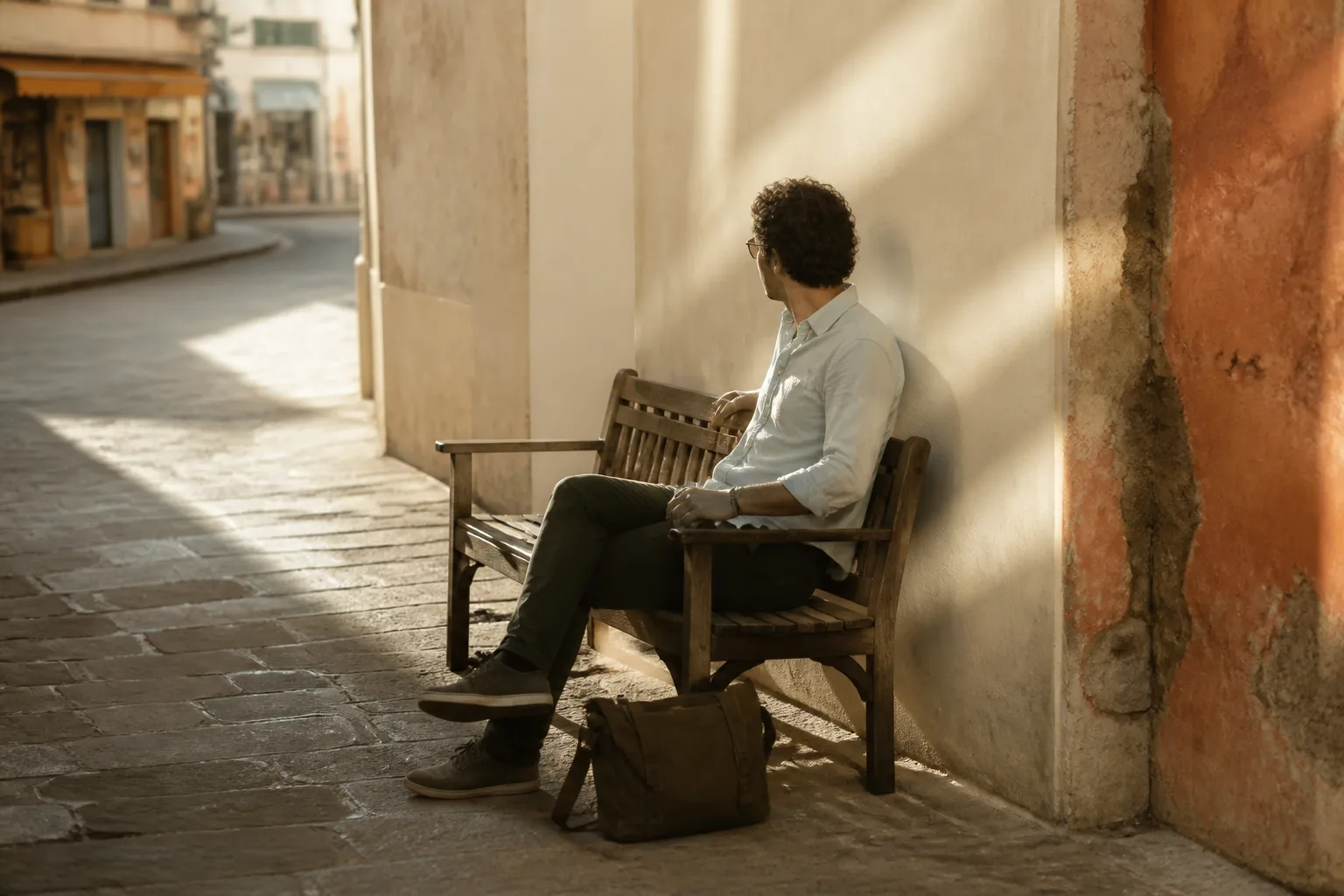
Benches are public, not reserved. Put the bag at your feet, not on the next seat. Stay long enough to reset, then leave the place for someone who has been walking longer than you have. A pause that never ends becomes another blockage, just sitting down.
Evening is the same pavement with different rules. Lighting, noise, and groups change the comfortable length of a block. If the loudest stretch is also the prettiest at dusk, walk it once, then peel toward a quieter parallel street instead of lingering in the pinch point.
A turning taken on purpose often shows workshops, residential doors, and the actual width people live with. Another block of main-line glass rarely adds that.
Choose a section you can walk out and back without emptying the day. Coming back along the same line is not a failure; it is how you notice what you walked past while still fresh.
Heat, wind, and a bag that looked light in the room all show up on the sidewalk. Pick the length first, then the views. Questions about strain belong with a clinician, not with a travel note.
The people who walk first
Three specialists walk centers on trips, write down what actually happened, and turn those notes into consultations for this part of a route. Credentials below are training they completed with independent studios; they are not a substitute for local rules on the day you go.

Street Walk Editor
Certificate in Pedestrian Route Briefing, Urban Visitor Institute
Clara walks a new center on the first morning, marks which end works as a start, and writes the sequence so a guest does not have to invent it at the loudest corner.

Side-Street Observer
Field Notes Practitioner, Visitor Flow Study Group
Jonah records where people actually pause, which turnings restore space, and which benches are already doing too much work by mid-afternoon.

Consultation Planner
Certificate in Travel Briefing Design, Independent Route Studio
Amira matches a first stretch to how much time and energy a traveler actually has, then keeps the plan from depending on one shop staying open.
From people who walked it
If you want help choosing a first stretch, a start end, or a backup when a door is shut, write to the team. Consultations stay on this piece of the trip: the main street, the center, and the streets that peel off it.
Request a Consultationbrewsterit exists to make a center walk readable: daily life on the pavement, not only glass. We would rather send you out with a short, honest sequence than with a list of doors you cannot possibly enter.
Contact UsThe pages on this site provide knowledge about walking a main street and city center as part of a trip. brewsterit offers consultations and editorial notes on that subject. The text is meant to help you understand a sequence of actions — where to start, how to share a sidewalk, how to read hours, where to pause — before you go out.
Conditions on the ground change between trips. Opening times, crowd patterns, construction, weather, and local rules can differ from notes written after an earlier walk. Confirm details again with the place itself, with lodging staff, or with whoever manages the street on the day you visit.
Walking involves effort. Questions about strain, heat, mobility, or whether a given distance is appropriate for you belong with a qualified clinician or other specialist, not with a travel website. We do not claim that a city walk improves health, and we do not treat fatigue as a puzzle the site can solve.
You decide how to use this information. brewsterit is not responsible for routes you choose, doors you find closed, time spent waiting, or any outcome of a walk taken after reading these pages. If you need a briefing tailored to a specific stretch, contact the team and treat the reply as guidance, not as a guarantee that the street will behave the same way twice.