
About the project
Why brewsterit exists
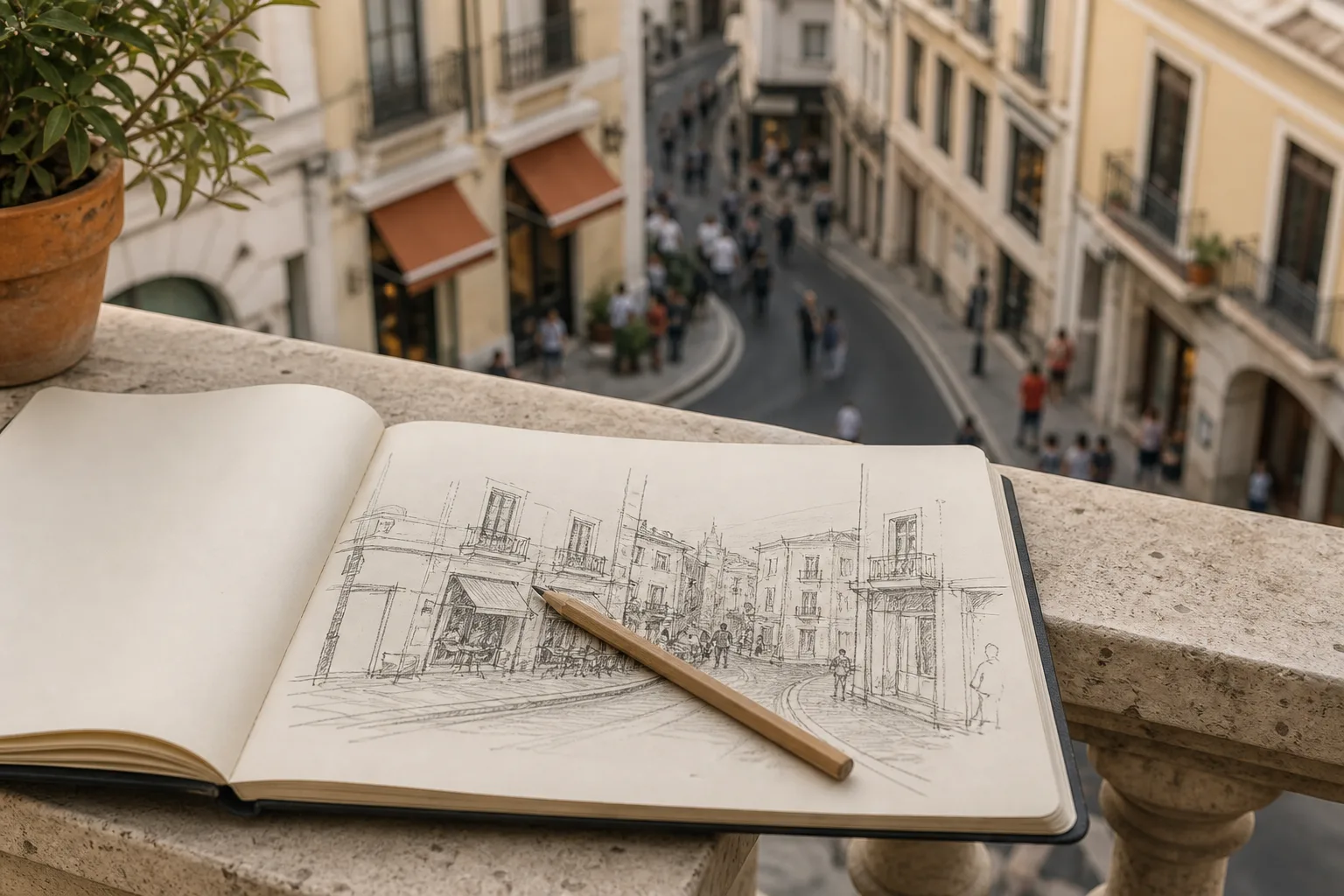
We treat the main street as a walk with a sequence, not as a photograph to collect and leave.
This page explains how the project started, how notes become published guidance, how a consultation is shaped before anyone steps outside, and how we choose partners who care about the same ordinary details: doors that stay shut, benches already taken, and turnings that restore space.
Origins
How the project began
The first notes were not meant for a website. They were private lists written after walks that looked simple on a map and felt messy on the pavement: a start end chosen too late, a cafe treated as the whole plan, a phone held in the lane while locals had to step into the street. The lists grew because the same mistakes kept repeating across different centers.
What stood out was not a lack of directions. It was the absence of an order. Experienced travelers already decide which end of a street to begin from, where to step aside, and when a side street is more useful than another block of glass. They rarely say those choices out loud because they feel obvious. For a first visit, they are not obvious at all.
brewsterit grew from that gap. The aim was never a longer attraction list. It was a clearer briefing for one part of a trip: the main street and the streets that peel away from it. We kept the tone calm on purpose. Closed shutters, heat, and crowded corners belong in the notes as facts, not as failures of the traveler.
The work still starts the same way it did then. Someone walks a stretch, writes what actually happened, and turns those observations into language another person can use before leaving lodging. That is still the core of every consultation we offer.

Editorial approach
How information is gathered and checked
A published note has to survive a second look. We do not publish a street tip from a single glance through a taxi window, and we do not leave a claim in the text if we cannot say how it was observed.
-
Walk first, write second
A stretch is walked at a normal pace, not raced. The writer marks start end, doors that were shut, places that worked as pauses, and turnings that restored space. Opinions wait until the notes exist.
-
Separate fact from preference
Opening patterns, sidewalk width, and crowd pinch points are recorded as facts. Whether a shopfront is attractive is preference. Readers need the first category more than the second when planning a walk.
-
Cross-check with a second pass
When a claim will guide a first stretch, another team member reviews the note against a later walk or against independent visitor-research conversations. Contradictions go back into the draft, not into the trash.
-
Date the confidence, not the street
Conditions change. We say what was true when the note was made and remind readers to confirm hours and local rules again. A briefing is guidance for preparation, not a frozen map of the next day.
From request to plan
How a trip briefing is built
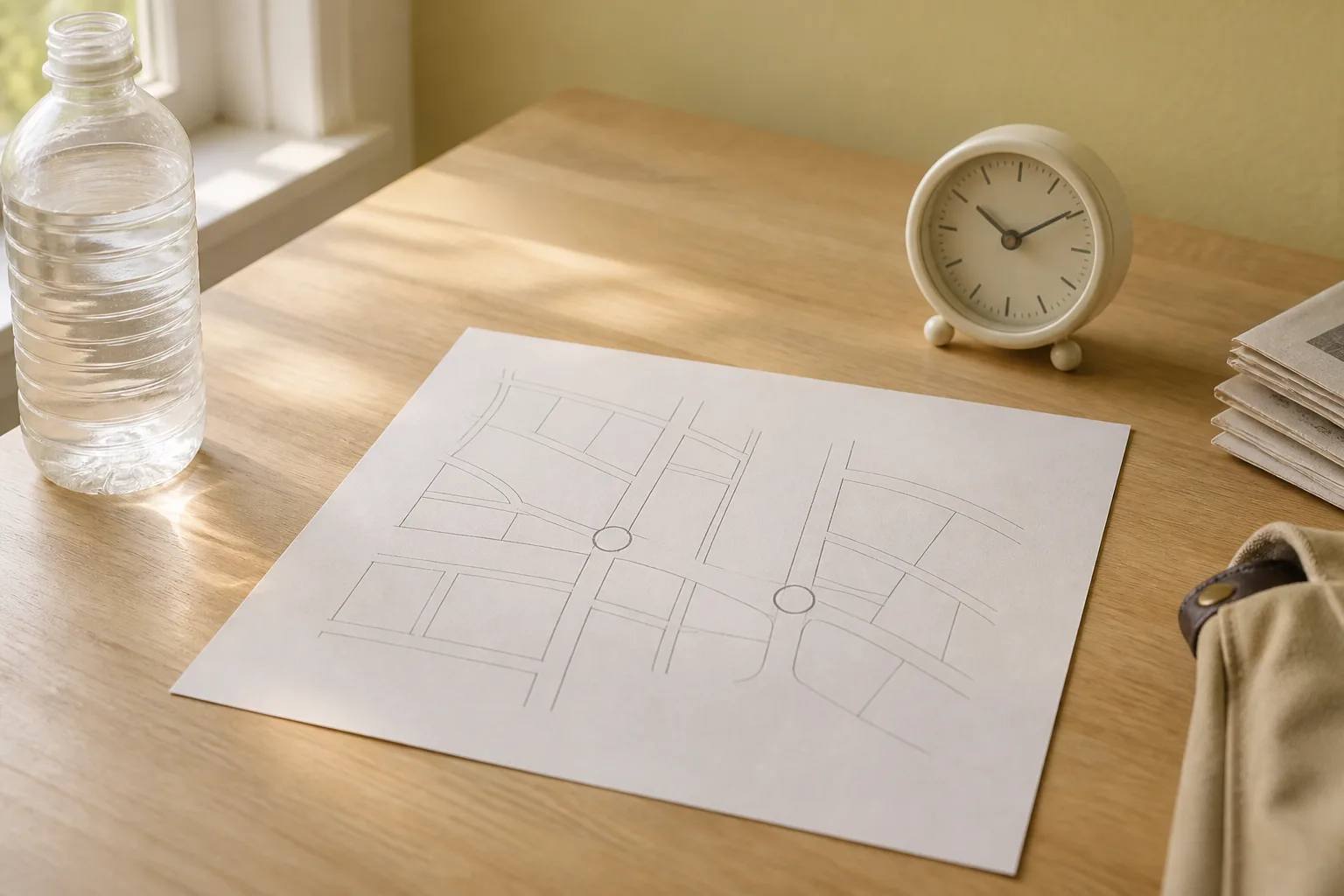
A consultation for this part of a route does not begin with a list of doors to enter. It begins with how much time and energy the traveler actually has, and with what they hope to notice: daily openings, a quiet turning, or an evening stretch that does not trap them in the loudest block.
From there we shape a first stretch that can be walked out and back without emptying the day. We choose a start end before anyone leaves lodging. We keep more than one option on the same line so a closed shutter does not collapse the plan. The result is a short sequence, not a promise that every shopfront will be open.
| First request | Time available, energy level, and whether the walk is a first look or a return to a known center. |
|---|---|
| Stretch choice | Length matched to readiness, with a clear return so the center does not feel raced through. |
| Sequence | Start end, pause rules, backup turnings, and what to do when the main line becomes too dense. |
| Hand-off | Written notes the traveler can reread before stepping out, plus a reminder to recheck local conditions. |
Traveler ethics
How we ask people to treat the street
A main street is someone else's weekday. The briefings emphasize sharing space over collecting scenes. The points below are not etiquette theater; they are the habits that keep a walk from becoming a nuisance.
If you need to look at a phone, step to a wall or a setback. The middle of the sidewalk is for people who are still moving.
We ask travelers to treat pause points as shared. A bag on a second bench seat, a long hold on the only shaded ledge, or a group stopping in a doorway pushes other people into the flow or into the road. None of that is required for a good look at the street.
Respect for local order also means accepting closed doors without turning them into a drama. Hours change. Staff take breaks. A briefing that depends on one window display is already fragile. Build the loop around the stretch, not around a single interior.
- Keep the main line moving; step aside to look, photograph, or decide.
- Leave benches and stoops after a real pause, not after a long claim on public seating.
- Use side streets to reset instead of forcing a conversation in the densest pinch point.
- Confirm rules and openings again on the day; do not treat an older note as permanent.
Partnerships
How we choose partners
We work with a small set of independent groups that share notes on pedestrian centers. Partners are selected for careful observation, not for glossy promotion. The names below are the studios we currently exchange field summaries with.
-
Harbor Walk Briefing Circle
Compares waterfront shopfront layouts and notes where viewing rails collide with the walking lane. We use their summaries when a stretch sits beside open water and the crowd pattern shifts at dusk.
-
Sidewalk Archive
Collects ordinary pause habits: which setbacks work, which benches are already overloaded by mid-afternoon. Their records help us keep pause advice grounded in what people actually do.
-
Corner Pace Collective
Studies yield behavior at tight corners and narrow commercial spines. We consult their notes when a first stretch has to turn without inventing a path through a blocked doorway.
-
Independent Route Studio
Reviews how briefings are written so a traveler can act on them without a guide on site. They help us keep language practical and free of promises the street cannot keep.
Need a briefing for this part of your route?
If you want help choosing a first stretch, a start end, or a backup when doors are shut, write to the team. Consultations stay focused on the main street, the center, and the turnings that leave it.
Request a ConsultationRead the field materials
Longer notes on first stretches, opening hours, side streets, and evening walks are collected on the articles page. Each piece is written to stand alone before a consultation.
Learn MoreAbout these materials
The pages on this site provide knowledge about walking a main street and city center as part of a trip. brewsterit offers consultations and editorial notes on that subject. The text is meant to help you understand a sequence of actions — where to start, how to share a sidewalk, how to read hours, where to pause — before you go out.
Conditions on the ground change between trips. Opening times, crowd patterns, construction, weather, and local rules can differ from notes written after an earlier walk. Confirm details again with the place itself, with lodging staff, or with whoever manages the street on the day you visit.
Walking involves effort. Questions about strain, heat, mobility, or whether a given distance is appropriate for you belong with a qualified clinician or other specialist, not with a travel website. We do not claim that a city walk improves health, and we do not treat fatigue as a puzzle the site can solve.
You decide how to use this information. brewsterit is not responsible for routes you choose, doors you find closed, time spent waiting, or any outcome of a walk taken after reading these pages. If you need a briefing tailored to a specific stretch, contact the team and treat the reply as guidance, not as a guarantee that the street will behave the same way twice.