Evening Center Walk Without the Pinch Point
Dusk changes the same pavement. Lighting and groups shorten what feels comfortable, so plan a stretch you can see once without camping in the loudest pinch until you are worn out.
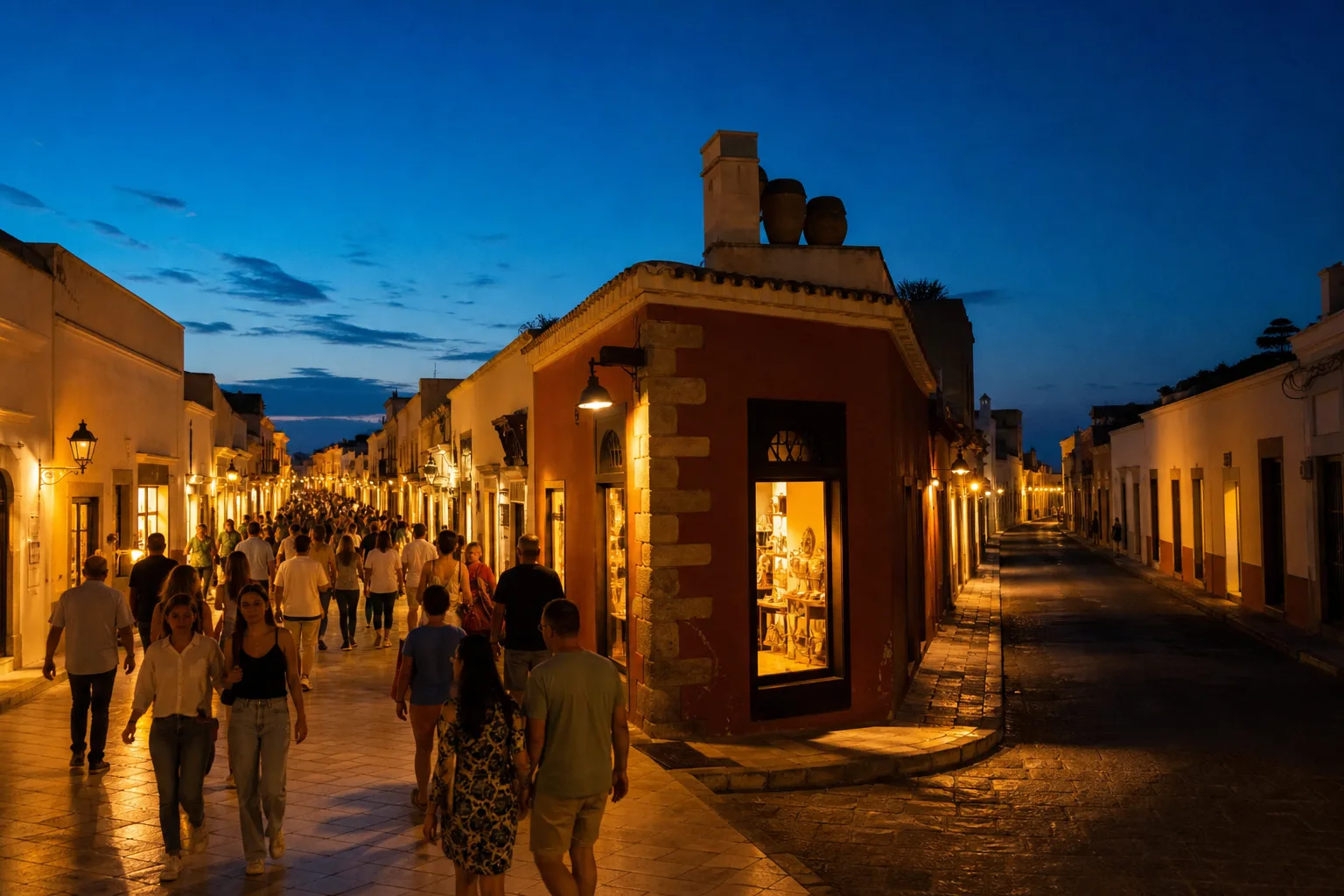
What dusk does to the same street
An evening center walk looks like the daytime version of the same map, but it does not feel the same under foot. Shop lights pull attention to glass. Groups form at doors and corners. Delivery vans may still claim curb space while restaurants take over the sidewalk with chairs. The pinch point — the narrowest, busiest segment — becomes louder and slower even if the block count has not changed.
Travelers often keep the afternoon length and simply shift the clock. That is how an evening walk turns into empty looking. Comfortable distance shrinks when every pause happens in a crowd and every photograph happens in someone else’s path. Plan shorter. Pass the pretty stretch once with attention, then leave before the pinch owns your energy.
Blue hour is beautiful and also misleading. Warm light suggests you should linger. Lingering in the densest segment is usually what empties the evening. Beauty and space are not always in the same place at the same minute.
Pass the pinch; do not camp in it
The pinch point is often the most photographed block: brightest windows, densest flow, least room to step aside. See it. Do not make it the place you stop to rebuild the plan, check messages, or wait for a table while blocking the lane.
- Name the pinch before you leave lodging — the corner or block you already know will clog.
- Walk through at a normal pace; step to a wall only if you need a short look.
- Take one pass for looking; save a second pass only if energy and space still allow it.
- Peel to a quieter parallel line when groups stop moving and the sidewalk becomes a queue.
The brightest block is not required to hold you until closing. One clear look, then a quieter return, is a finished evening — not a retreat.
Lighting, groups, and a shorter length
Lighting helps you see shopfronts and also creates glare, deep shadow, and sudden stops where people wait for photos. Groups change the rhythm more than individuals do: a party of six can freeze a narrow sidewalk for a full minute. Your comfortable block length should account for that, not for the empty morning version of the same street.
- Prefer a shorter out-and-back than the afternoon stretch you already walked.
- Keep a parallel street in mind before you need it, not after you are stuck.
- Leave benches after a real pause; evening seating fills and turns social fast.
- Do not pin the evening on one interior that may already have a line at the door.
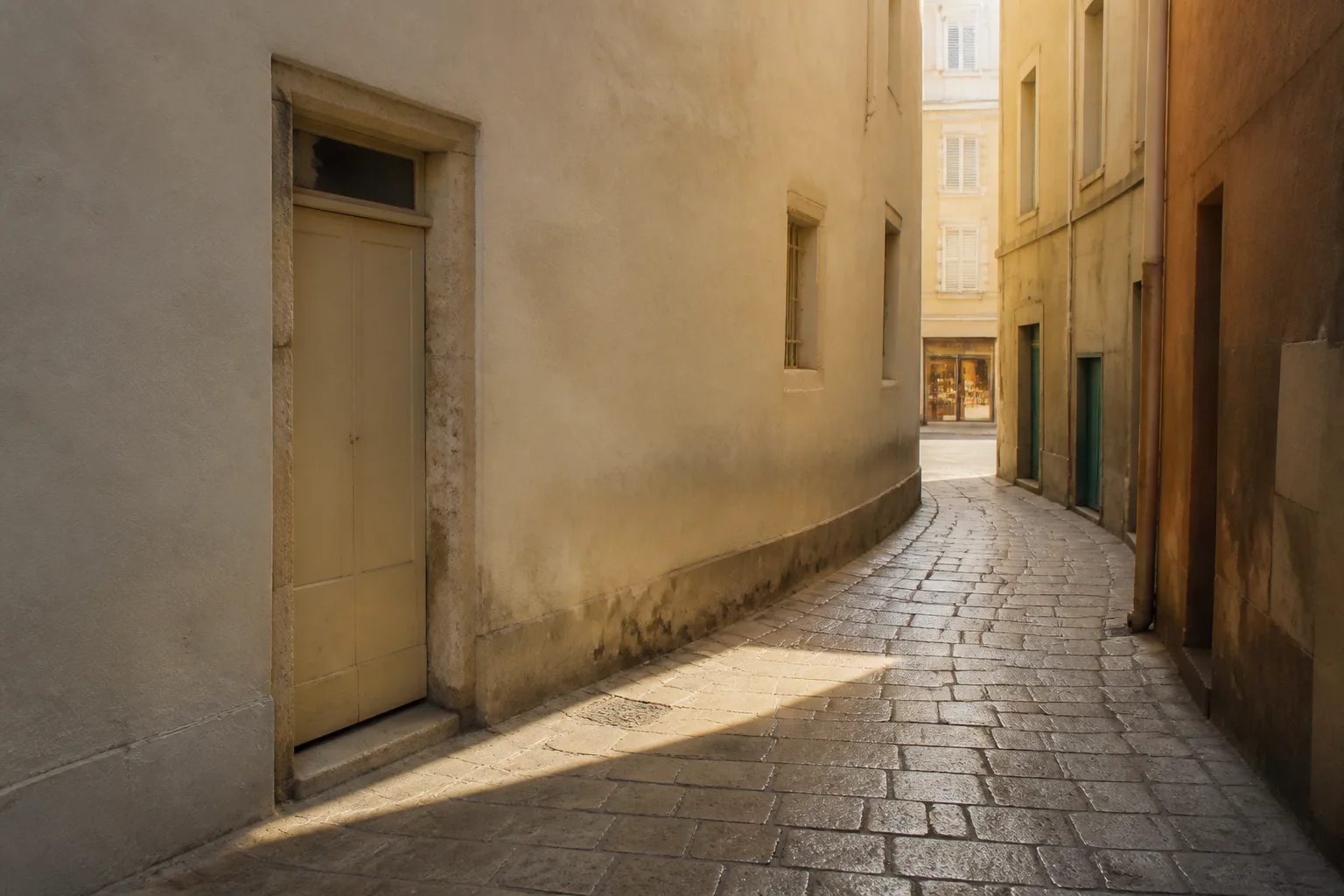
A quieter parallel line is not a failure to “do” the center. It is how you keep enough attention to notice what the lights actually show — reflections, openings, the way people share the curb — instead of only negotiating elbows.
Finish before the street finishes you
Decide a turnaround time or landmark in advance. When you reach it, reverse or take the quieter return even if the glass still looks inviting. Curiosity will argue for one more block. Fatigue will collect the bill later, on the walk back to lodging.
If you still have energy after the first pass, extend by one short segment only, then hold the return. An evening that ends cleanly leaves a clearer memory than one that dissolves into waiting at doors and sidestepping groups until the lights feel harsh instead of warm.
Evening patterns change with seasons, events, and weather. Confirm openings and local conditions on the day you go. Questions about strain, night walking, or whether a distance suits you belong with a clinician, not with a travel note. If you want a briefing matched to a specific dusk stretch, contact the team and treat the reply as guidance, not a promise that the pinch will behave the same way twice.