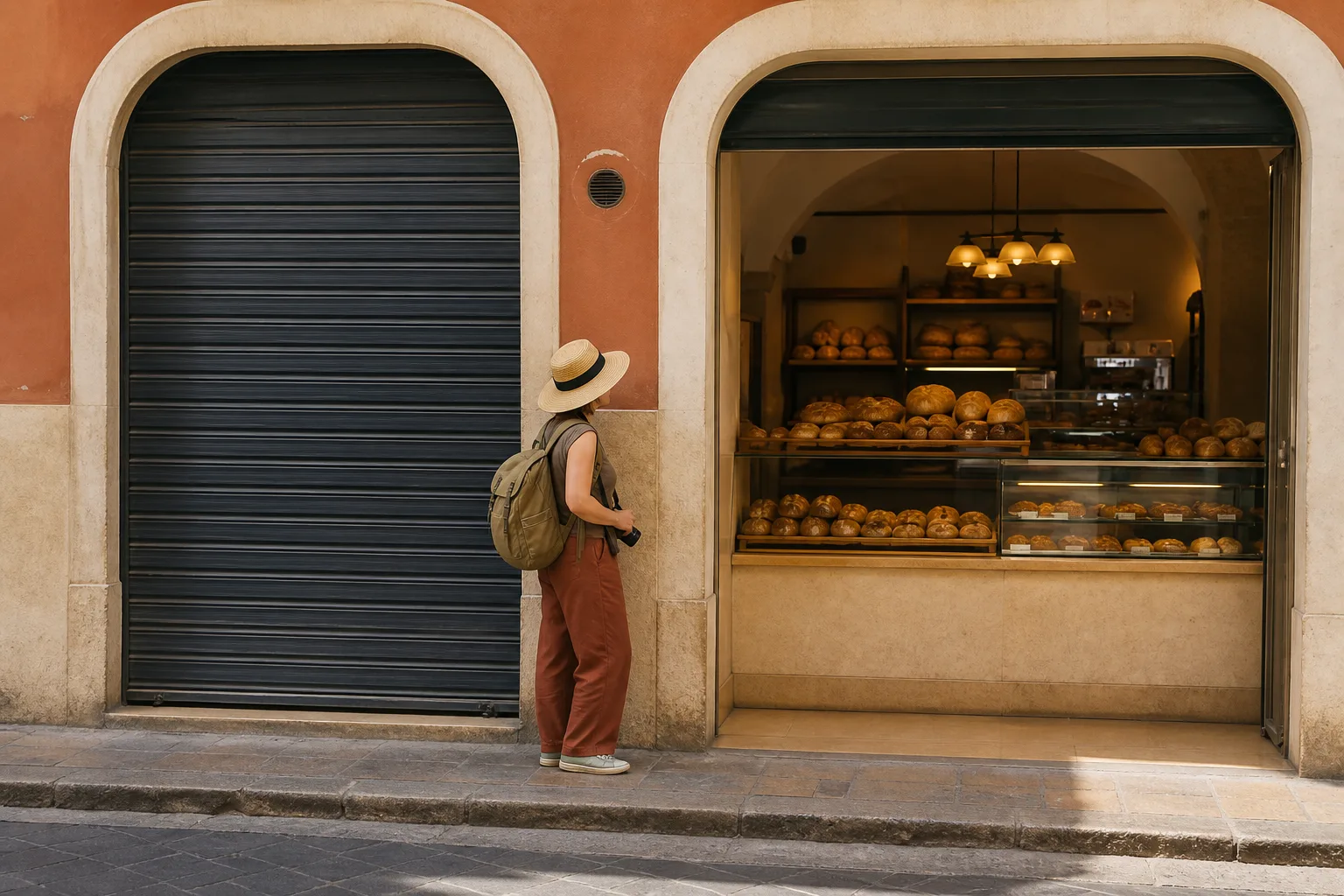
When Side Streets Beat Another Block of Glass
Density on the main line is not a dare. A short turning can restore space, show a different pace one block off, and let you rejoin the same street without treating the walk as ruined.
When another block of glass is enough
The main street is where many travelers feel they should stay. Shopfronts stack. Glass reflects. Groups slow at every window. After a few blocks, continuing can feel like proof of effort rather than attention. That is the moment a side street earns its place in the plan — not as an escape from the center, but as a reset that keeps the walk usable.
A turning works when the sidewalk has become negotiation rather than movement: bags at shoulder height, deliveries pausing in the lane, no wall recess left to step into. Pushing through one more block of glass rarely restores calm. Stepping off the main line for a short stretch often does.
This is not about hunting “hidden gems.” It is about reading density and choosing space. The side street may look quieter, plainer, or more workshop than storefront. That change of texture is the point. You are still in the center; you are simply not insisting that every minute must face the brightest window.
Heat and wind make the choice clearer. On a hard afternoon, one more reflective facade can finish the walk early. A shaded turning buys enough room to breathe and decide whether you still want the main line at all.
What you often see one block off
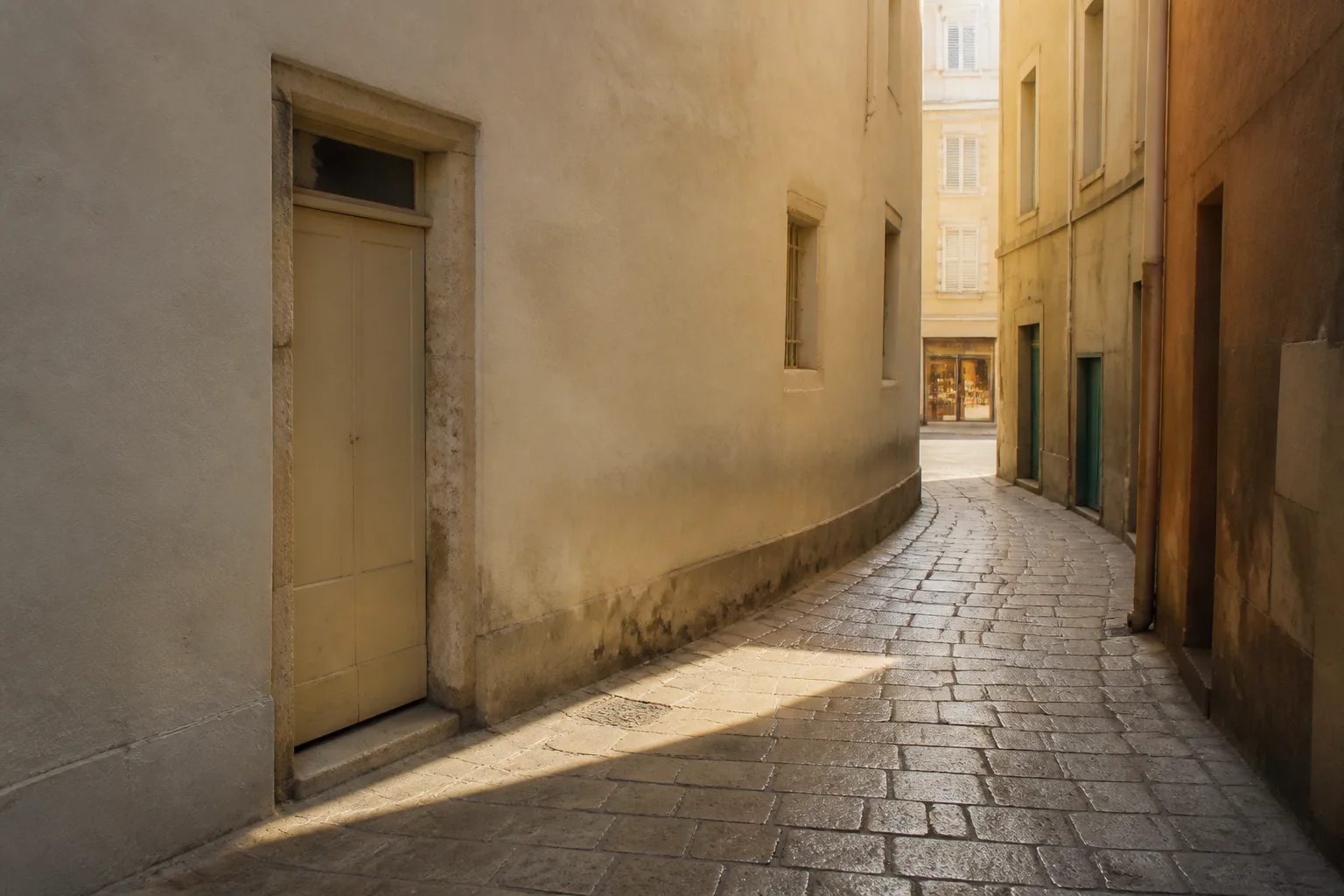
One block away from the commercial spine, the pavement usually widens in feel even when the stones are the same. Doors may open onto service yards. Shade can arrive sooner. People with errands move with less browsing. You may hear less music from doorways and more of ordinary work.
- Workshop doors and deliveries instead of continuous display windows
- Fewer photo pauses that clog the middle of the sidewalk
- A clearer wall line where you can step aside without blocking flow
- A quieter return path if you need to circle back to lodging later
Leaving the main line for a few minutes is not quitting the walk. It is how you keep enough attention to finish the stretch you meant to see.
How to turn and how to return
A good turning is planned as a loop fragment, not as a new destination. Pick a corner you can recognize again. Walk far enough to feel the pace change — often half a block to one block — then decide whether to parallel the main street or fold back.
- Choose the turning at a clear corner, not mid-block through a private passage.
- Walk until the density drops enough that looking no longer blocks anyone.
- Note one landmark so you can find the main line without opening a map in the lane.
- Return to the same street and continue from where you left, or reverse if energy is low.
Do not treat the side street as a place to rebuild the entire afternoon. If you invent a new loop every time the main line feels hard, you lose the stretch you came for. Use the turning, then rejoin. The main street is still available after a short reset; it does not require you to endure every crowded meter first.
Density is information, not a test
Some days the main line stays manageable. Keep walking. Other days construction, school release, or evening groups change the same pavement. Conditions differ between trips. Confirm what you can on the day you go.
Write one preferred turning into the plan before you leave lodging. When the moment comes, you will not need to invent a route while standing in the pinch. If you want a briefing on when to peel off a specific stretch, contact the team and treat the reply as guidance, not a guarantee that the corner will feel the same twice.