Reading Opening Hours Without Ruining the Walk
A shutter down at midday is ordinary street life, not a verdict on your planning. Check a few openings, keep backups on the same stretch, and protect the walk from depending on a single door.
Closed doors are data, not drama
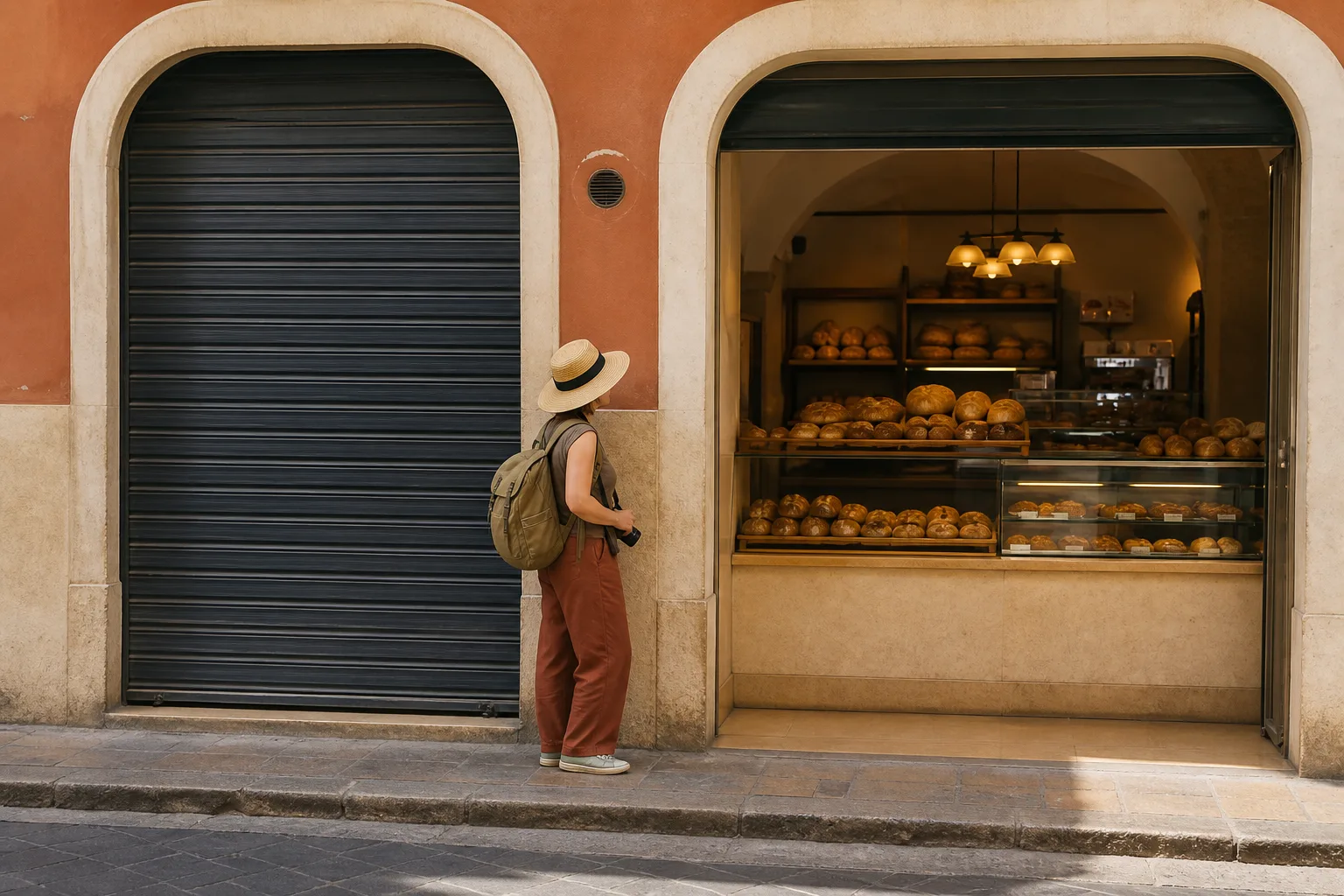
Travelers often treat a closed shopfront as a personal failure. Staff take breaks. Deliveries arrive. Hours posted on a door can lag behind what actually happens on a given day. The walk survives when you treat openings as one layer of information, not as the spine of the whole plan.
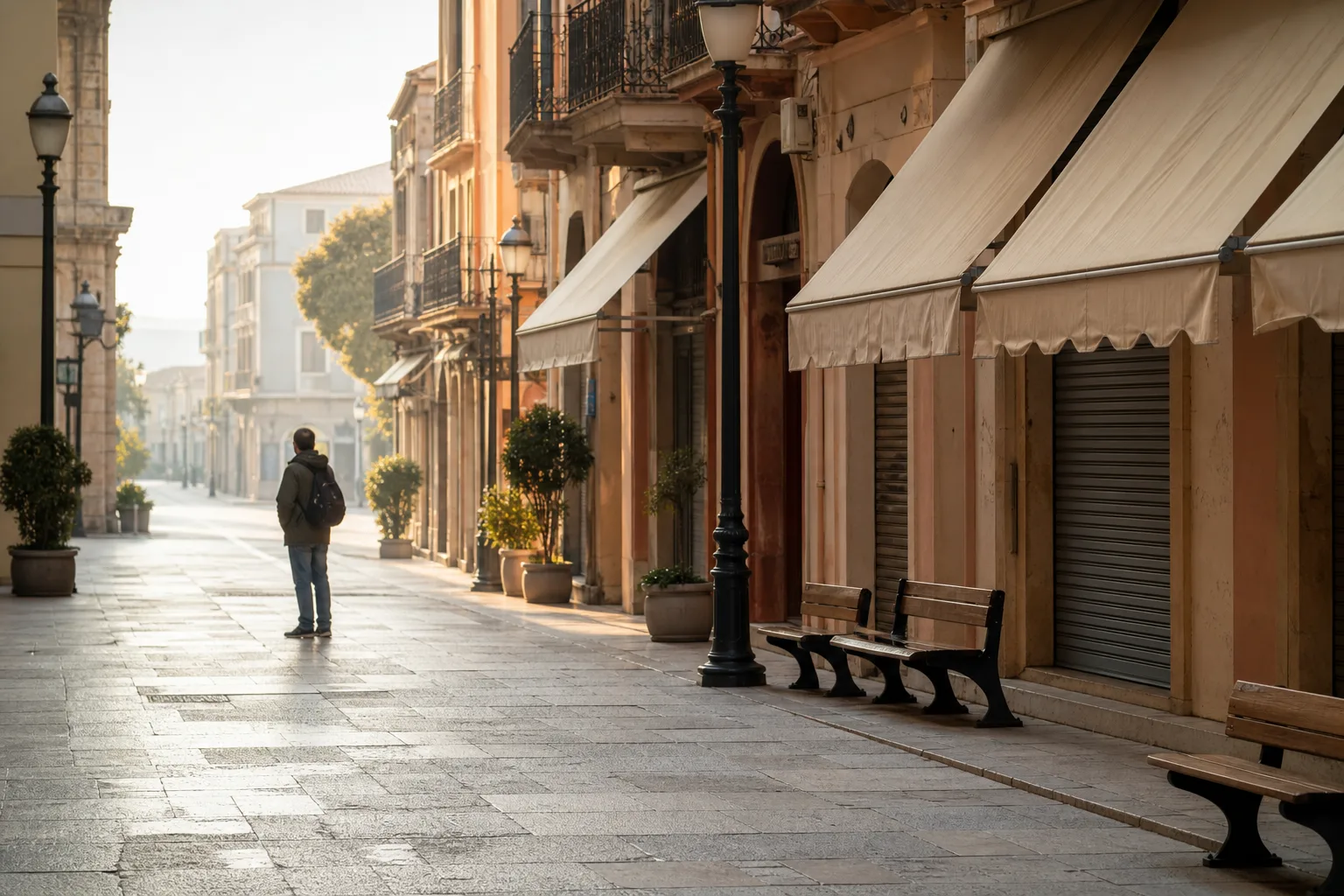
The sidewalk still works when glass stays dark. You can still read pace, notice who yields at a corner, and find a setback to pause without blocking the lane. Interiors are optional. The stretch is not.
Hours also change between trips. A note from an earlier walk is a starting point. Confirm again with the place itself, lodging staff, or whoever manages the street on the day you visit. Weather, holidays, and local schedules can move openings without updating every sign you saw last season.
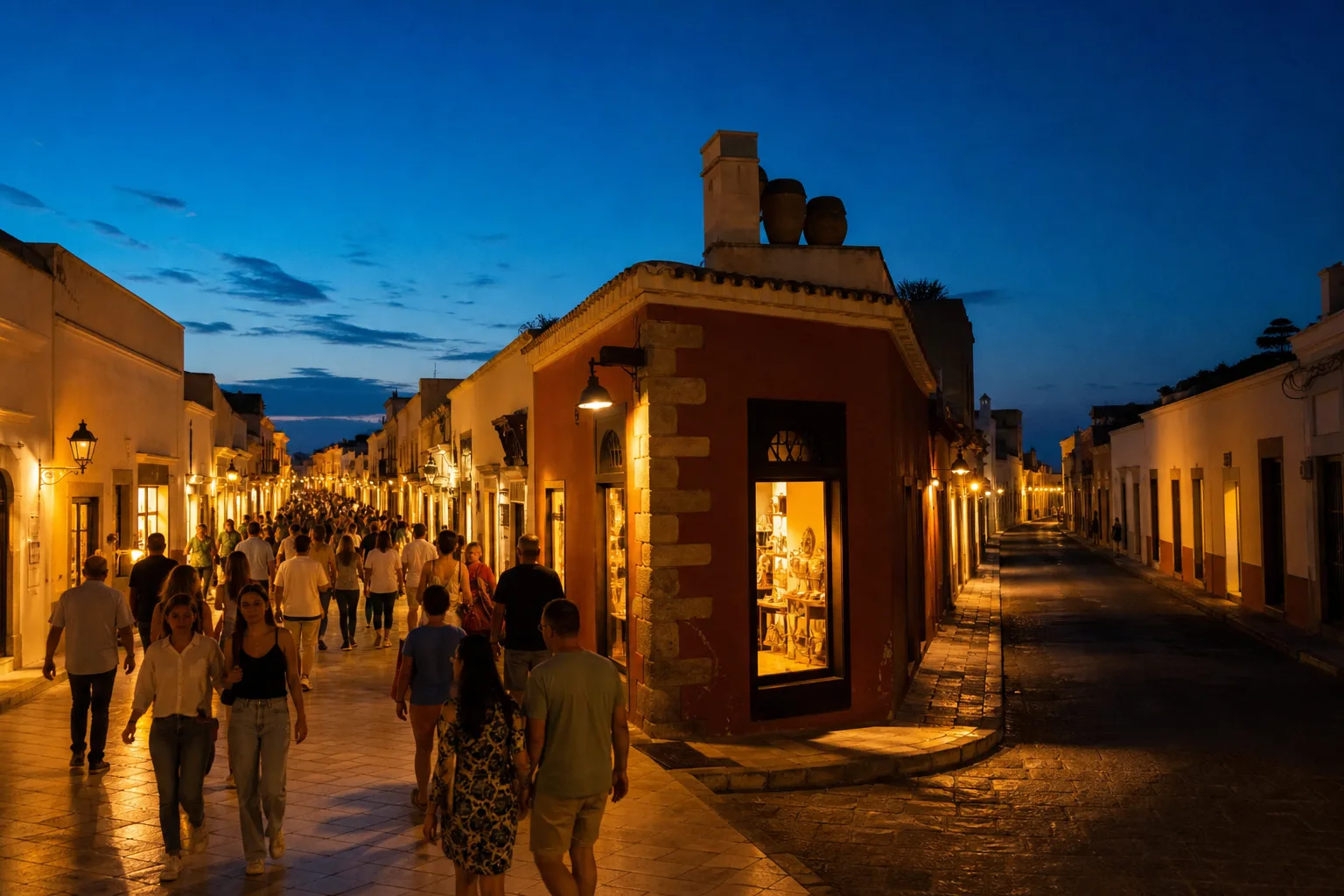
Midday is especially deceptive. A street that looked lively at breakfast can show a run of shutters by early afternoon, then wake again later. That pattern is not a trick played on visitors; it is how many commercial spines actually breathe. Your job is to arrive with a sequence that still makes sense when half the doors stay down.
How to check hours without stopping the flow
Standing in the middle of a narrow sidewalk with a phone is the habit locals complain about most. Step to a wall or a recess before you read a posted schedule. Photograph the card if you need it later. Then keep moving. Looking is allowed. Occupying the lane while you negotiate a plan is not.
- Note two or three openings on the same stretch before you commit to any interior.
- Mark one backup that opens earlier or later than your first preference.
- Decide in advance what you will do if all three disappoint: continue the stretch or take a turning.
- Do not rebuild the loop mid-block while people with errands wait behind you.
If a posted card conflicts with what you see — lights on behind a locked door, or a dark room under an “open” sign — trust the door first and keep walking. Argue with the sign later from a setback, not from the middle of the flow.
Build the afternoon around the pavement and the sequence, not around one window display that may already be dark when you arrive.
Keep backups on the same line
A fragile plan sounds like this: we will walk until we reach that one cafe, then the day makes sense. When that cafe is full or shut, the walk feels ruined even if the street still has useful blocks ahead. A sturdier plan keeps options within the same stretch so a closed door does not force a long detour or a taxi rewrite.
- Prefer clusters where more than one doorway might be open at the same hour.
- Accept that midday can look half-asleep even on busy commercial spines.
- Use a quiet adjacent block as a reset if the main line is all shutters and heat.
- Return along the same street later; evening openings often differ from the afternoon.
Backups are not about collecting more interiors. They are about keeping attention on the walk when one plan fails. You still share the sidewalk. You still leave benches after a real pause. You still avoid pinning the mood of the trip to a single purchase or a single room.
A useful backup can also be non-commercial: a turning with shade, a ledge that works as a short pause, or a parallel street that lets you reset without abandoning the main line. Those options keep the stretch intact when every shopfront disappoints.
What to write down before you leave lodging
A short list beats a long wishlist. Write the stretch, the start end, and two openings you care about plus one backup. If none of those work, the stretch itself remains the activity: pace, turnings, and a return that does not feel empty. That list also keeps you from inventing a new destination every time a door stays shut.
Include a note about when you will stop extending the hunt. Endless door-checking turns a calm walk into a scavenger hunt. Two or three checks on the same line are enough. After that, walk. The street still has something to show even when the interiors do not.
If you want help matching hours and backups to a specific center stretch, contact the team. Treat any reply as guidance for preparation. The street will not promise the same openings twice, and we do not promise that either.